Intel 13th gen
Intel 13th Gen Raptor Lake: Everything you need to know about Intel’s next-gen processors
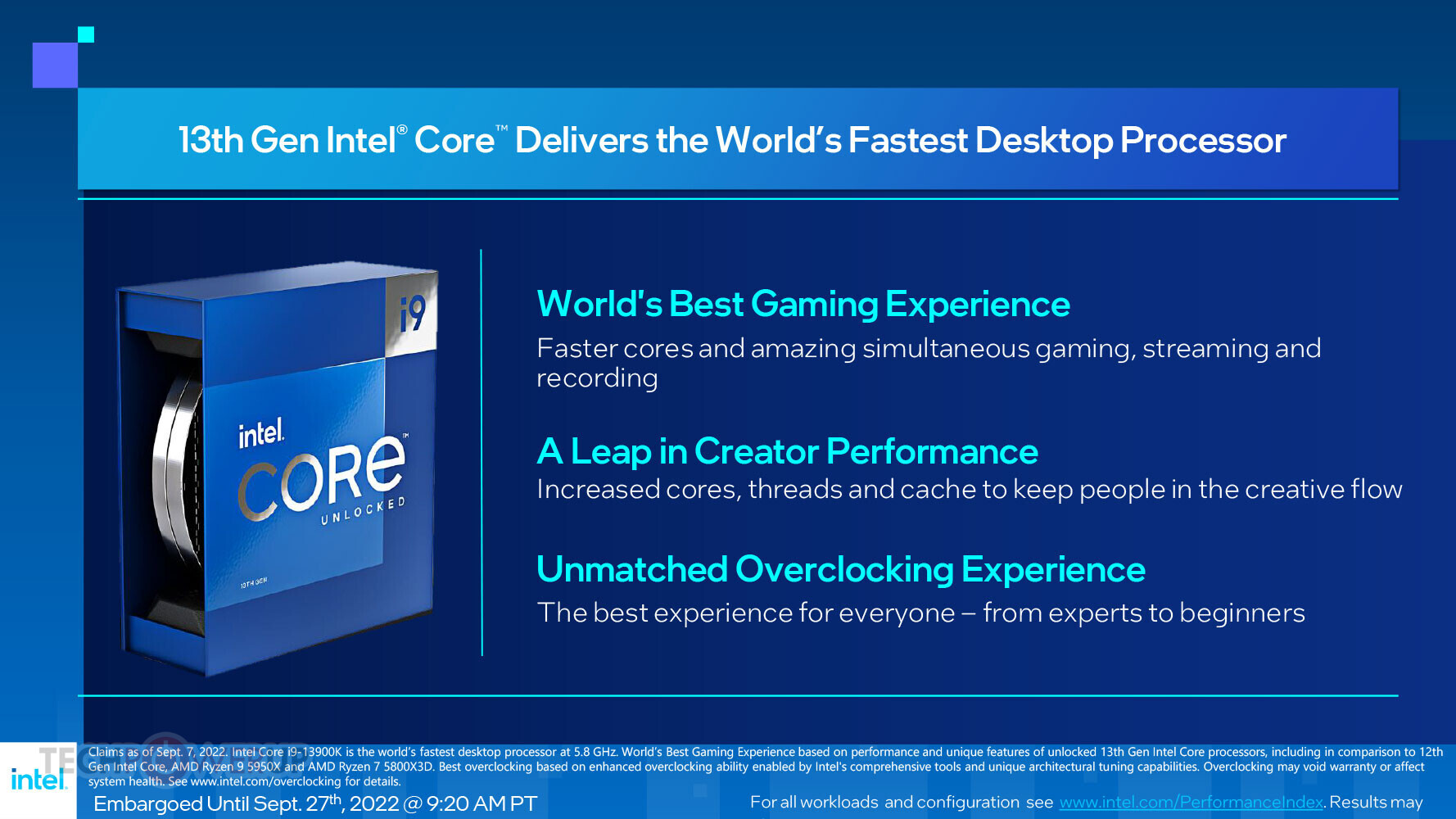
Following AMD's new send off of the Ryzen 7000 series, Intel's own cutting edge central processors are presently official. The thirteenth Gen "Raptor Lake" computer processors will be coming to showcase soon and in the standard manner, there's a ton to discuss.
All the more explicitly, Intel has nitty gritty its work area thirteenth Gen chips as of now. There is a lot to examine, take apart and obviously, contrast with the opposition. thirteenth Gen, in a not-at-all-astounding move, will be more earnestly, quicker, and more grounded than the twelfth Gen that it succeeds.

Intel 13th Gen Raptor Lake
There are many specs, details, and performance metrics to get through. But if you're looking for the briefer version, here's what we're looking at.
.Up to 24 cores (combination of P (performance) and E (efficient) cores) and 32-threads.
.Intel String Chief improves jobs by assisting the operating system with circulating burdens to ideal centers.
.Intel Core i9-13900K is the "world's fastest gaming CPU" with a 5.8GHz clock speed on the P-cores.
.DDR4 3200 and DDR5 5600 support.
.P-cores, E-cores, graphics, and memory can be overclocked on Z690 and Z790 chipsets.
.XMP 3.0 support.
.Integrated graphics capable of driving 8K60 HDR video and four simultaneous 4K60 displays.
.Intel Killer Wi-Fi 6E.
The 13th Gen CPUs are built on the same Intel 7 process as the 12th Gen "Alder Lake." But with impressive performance improvements. It's expected these will be the last CPUs built on Intel 7 before the move to Intel 4.
12th Gen, the new Raptor Lake CPUs boast Intel's hybrid design of P (performance) and E (efficient) cores. Core i9 now boasts 24 total cores, though like the Core i7 only 8 of these are P-cores. Across the board, though, the 13th Gen sees double the number of E-cores .Turbo clock speeds are also increased compared to 12th Gen, with up to an additional 600MHz from the Core i9.
Intel 13th Gen increases its DDR5 support up to 5600, compared to 4800 in the 12th Gen. It's also now confirmed that DDR4 support does remain up to 3200. AMD has DDR4 with Ryzen 7000, so this additional backward compatibility is no doubt a comfort to some Intel PC builders.
Both PCIe 4.0 and 5.0 support is included, with up to 16 lanes of PCIe 5.0 bandwidth. And 13th Gen is compatible with both Z690 and Z790 chipsets while using the same LGA1700 socket as the 12th Gen
In a handful of games when the Core i9-13900K is compared to the AMD Ryzen 9 5950X, Intel boasts up to 58% increased average frame rates and up to 107% frame consistency with higher 1% lows.Yet, both were matched with a Nvidia RTX 3090 at 1080p.
"Intel claims up to 41% better multi-threaded performance from 13th Gen"
These E-cores also have higher clock speeds and up to 4.3GHz turbo. It's a similar tale with the P-cores, with an updated design, up to 600MHz clock speed increase, and a larger L2 cache. If you're into overclocking, the P-cores have already reached 8 GHz using liquid nitrogen.
Will Raptor Lake support DDR4 memory modules?
Yes, DDR4 3200 is supported, though overall system performance will be lower than when using DDR5.

Comments
Post a Comment